
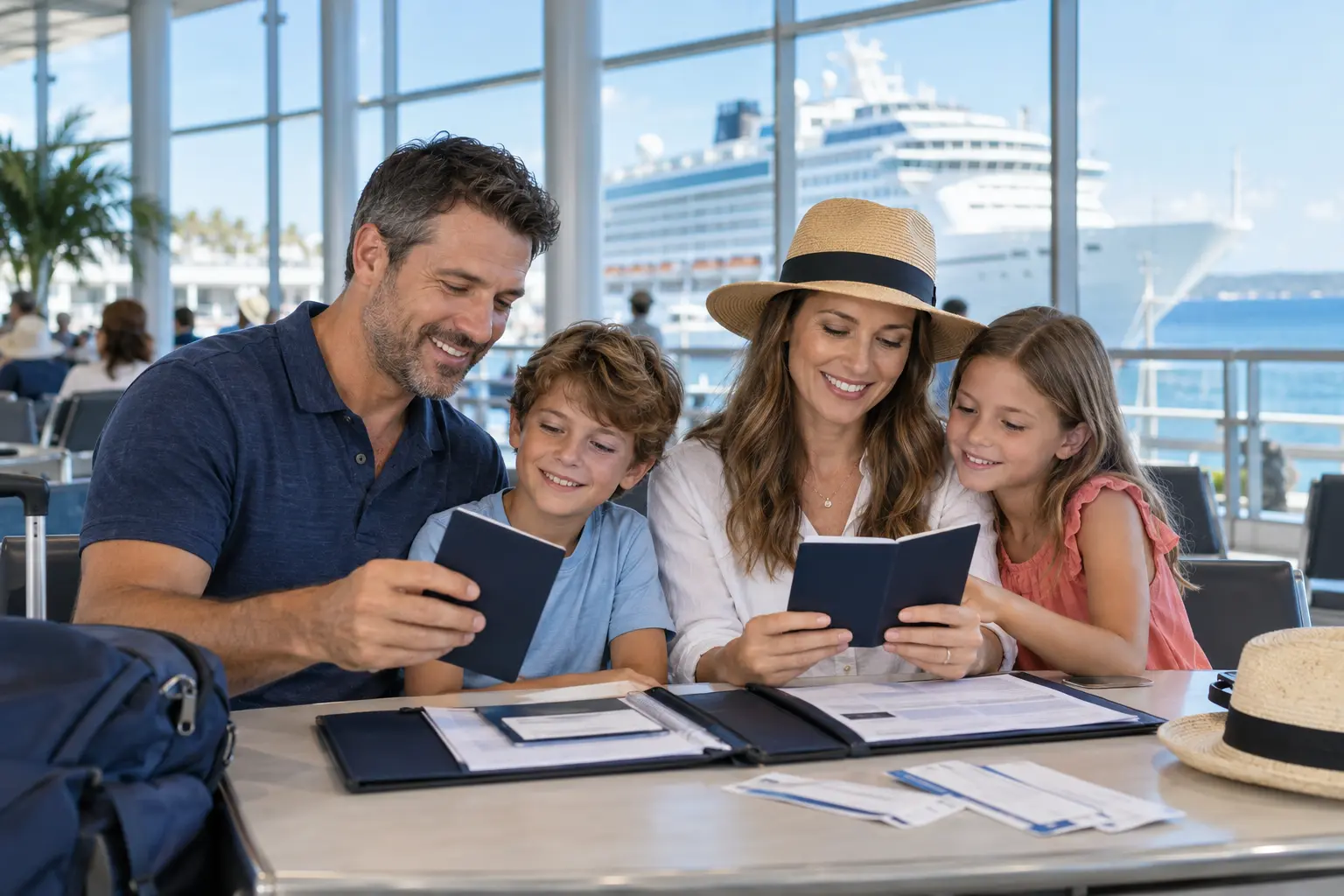
You do not always need a passport for a Disney cruise, but the answer depends on your citizenship, itinerary and departure port. Some U.S. citizens on eligible closed-loop cruises may sail with approved proof of citizenship and identification instead of a passport. Other itineraries require a passport, and every traveler needs the exact documents Disney Cruise Line and the destination countries require.
Even when a passport is not mandatory, a valid passport book is usually the simplest and most flexible choice. It can be especially important if an emergency forces you to leave the ship in another country and fly home.
When can a U.S. citizen take a Disney cruise without a passport?
U.S. Customs and Border Protection identifies a closed-loop cruise as one that begins and ends at the same U.S. port. Under the Western Hemisphere Travel Initiative, U.S. citizens on qualifying closed-loop cruises may be able to re-enter the United States with approved proof of citizenship instead of a passport book.
For an adult, that commonly means a government-issued birth certificate plus a government-issued photo ID. Other approved citizenship documents may also qualify. Children younger than 16 on an eligible closed-loop cruise may generally present a government-issued birth certificate or another approved proof of citizenship.
That exception is about entry or re-entry to the United States. It does not guarantee that every cruise itinerary, destination country or cruise line will accept the same document combination. Disney's official required travel documents guidance says every guest must present a valid passport or other acceptable proof of citizenship at check-in. Guests without the proper documents can be denied boarding.
When is a passport required for a Disney cruise?
A passport is generally required when an itinerary begins and ends in different ports, begins or ends outside the United States, or visits a destination that requires one based on the traveler's citizenship. International air travel also changes the answer: Disney states that travelers entering or re-entering the United States by air must have a valid passport.
Examples that deserve especially careful review include:
- One-way or repositioning cruises: The sailing may not qualify as a closed-loop cruise.
- European, Australian and other cruises departing outside the United States: International entry rules apply before you ever reach the ship.
- Alaska itineraries involving Canada: The cruise documents and any separate land or air plans can create different requirements.
- Travel before or after the cruise: A flight or independent border crossing may require a passport even when the cruise itself has another acceptable option.
- Non-U.S. citizens: Passport, visa, residency and re-entry requirements vary by nationality and immigration status.
Never decide based only on another traveler's similar-looking cruise. A small difference in port, routing, citizenship or pre-cruise plans can change the requirement.
What is a closed-loop Disney cruise?
A closed-loop cruise starts and finishes at the same U.S. port. A round-trip Port Canaveral sailing that returns to Port Canaveral is the common example. A cruise that leaves from one city and ends in another is not closed loop, even if both ports are in the United States.
CBP's official Western Hemisphere Travel Initiative page explains that U.S. citizens on closed-loop cruises may enter the United States with a birth certificate and, when applicable, government-issued photo identification. It also warns that foreign destinations may require additional or different documents.
Closed loop does not mean “no documents needed.” Every guest still needs the approved documents for that sailing. A hospital souvenir certificate, Social Security card or ordinary photocopy should not be assumed to satisfy the rules. Follow Disney's exact wording and obtain certified records from the appropriate government vital-records office when required.
Why is a passport book still the safest choice?
A passport book provides more flexibility than a birth certificate and photo ID. The practical difference becomes clear when something interrupts the cruise.
If you must leave the ship in a foreign port because of illness, injury, a family emergency or a missed departure, returning to the United States by air normally requires a passport book. Without one, you may need help obtaining emergency travel documentation before you can fly.
A passport can also reduce uncertainty at check-in because it combines proof of identity and citizenship in one widely recognized document. That does not remove visa rules or destination-specific requirements, but it creates fewer moving parts than protecting multiple original documents.
The best question is not only “Can I board without a passport?” It is also “What document would I want if the trip does not go exactly as planned?”
Passport book or passport card for a Disney cruise?
A U.S. passport card is a limited travel document. It can be used for certain land and sea travel from Canada, Mexico, Bermuda and Caribbean countries, but it is not valid for international air travel.
A passport book is the more versatile option because it can be used for international flights and a broader range of destinations. If emergency flexibility is the reason you are getting a passport, the book usually addresses that concern more fully than the card.
Review the current comparison and application instructions on the U.S. Department of State's official passport website. Processing times and expedited-service options can change, so apply well before the sailing rather than planning around the shortest estimate.
Do children need passports for a Disney cruise?
Children need their own approved travel documents. A parent's passport does not cover a child. On some eligible closed-loop cruises, a U.S. citizen child may use an original or certified government-issued birth certificate instead of a passport, but the exact requirements still depend on the itinerary and age.
Families should also check consent documents. Disney Cruise Line requires its Authorization for Minor to Travel Without a Parent or Legal Guardian when a traveler younger than 18 is sailing without a parent or legal guardian. The accompanying adult must be at least 18, and the completed form must be presented as Disney directs.
A child traveling with one parent may face additional destination or consent considerations. Check the rules for every country on the itinerary and the family's specific custody circumstances. This article is general planning information, not legal advice.
What about non-U.S. citizens and permanent residents?
Do not rely on the U.S.-citizen closed-loop exception if you are not a U.S. citizen. International guests may need a passport, visas, a Permanent Resident Card or other documents to board the ship, enter each destination and return to the United States.
The requirement follows the traveler, not the household. Members of the same family can need different documents because they hold different citizenship or immigration statuses. Each guest should verify requirements with Disney Cruise Line and the appropriate embassies, consulates and government agencies.
How to check the documents for your exact sailing
- Identify the itinerary precisely. Note every embarkation port, port of call and final port.
- Confirm whether the cruise is closed loop. The ship must begin and end at the same U.S. port.
- Check every traveler's citizenship and age. Do not assume one answer applies to the whole family.
- Review Disney's reservation guidance. Use the current requirements linked to the exact sailing and complete online check-in correctly.
- Check government sources. Review CBP re-entry rules, State Department passport information and destination-country entry requirements.
- Include the travel around the cruise. Flights, land crossings and separate hotel stays can create requirements beyond the ship.
- Inspect expiration dates and names. Make sure documents remain valid for the required period and match the reservation details.
Carry the original documents Disney requires in your hand luggage. Do not pack them in checked baggage or assume a phone photo will replace an original document.
Common Disney cruise passport mistakes
- Assuming every round trip is closed loop. It must start and end at the same U.S. port.
- Checking only U.S. re-entry rules. A destination can impose its own requirements.
- Using a passport card as if it were a passport book. The card cannot be used for international flights.
- Waiting until online check-in to inspect documents. Passport and certified-record processing can take time.
- Forgetting a child's paperwork. Minors need approved identity and citizenship documents, plus authorization when applicable.
- Relying on an old social-media post. Rules and itineraries change; official instructions control.
Bottom line: should you get passports for a Disney cruise?
For many U.S. families, the practical answer is yes—even when an eligible closed-loop sailing offers another document option. A passport book is easier to use, supports international air travel and gives the family more flexibility if an emergency changes the trip.
If you choose to sail without passports, confirm in writing that every traveler has the exact alternative documents accepted for the specific itinerary. Do not treat “passport not required” as “identification not required.”
Continue planning with How Many Nights Should Your First Disney Cruise Be?, Which Disney Cruise Stateroom Should You Choose? and What Is Included in a Disney Cruise?
Ready to compare Disney Cruise Line sailings?
Explore Brittany's Disney Cruise Line vacation page, then request vacation pricing when you are ready. Brittany can compare and book eligible Disney Cruise Line vacations, explain sailing and stateroom choices and provide advice at no added planning fee. She also monitors eligible reservations for qualifying new discount offers after booking.
Brittany can point you to current travel-document resources, but each traveler is responsible for obtaining the passports, visas and other documents required for the trip. She does not arrange transportation, create personalized itineraries or manage onboard and port-day systems.